The Seismic Shift: Navigating Iran's Post-Khamenei Era and Escalating Middle East Tensions
The dawn of a new era in Iran arrived abruptly and violently. Sunday, following a targeted US-Israeli strike that claimed the life of Supreme Leader Ayatollah Ali Khamenei, Iranians awoke to a nation profoundly altered. After more than three decades at the helm, Khamenei's passing has not merely left a void at the pinnacle of power but has simultaneously ignited a powder keg of regional instability, sending shockwaves across the Middle East and beyond. The immediate aftermath is defined by a complex tapestry of internal relief, disbelief, and profound anxiety, all against the backdrop of rapidly escalating military confrontations. The world now grapples with unprecedented post Khamenei tensions, facing a future for Iran and the region that is more uncertain than ever before.
A Nation in Disbelief and Division: Inside Iran's Tumultuous Mood
Within Iran, Khamenei's death has triggered a maelstrom of conflicting emotions. For many, particularly those who have endured decades of economic hardship, political repression, and social restrictions under his rule, the news of his demise brought a sense of cautious relief, even clandestine celebration. Reports from cities like Isfahan and Abdanan described cars honking and people cheering, with some even toppling a monument to Ruhollah Khomeini, Khamenei's predecessor, in a symbolic act of defiance. This public display, however, remained largely in pockets, overshadowed by an pervasive sense of disbelief and apprehension about what comes next.
One Tehran resident, quoted on Sunday, captured the sentiment of many: "I'm happy he is gone, but I almost don't believe that it has happened. So many of us are in disbelief, I don't even think I can celebrate yet." This sentiment highlights the deeply ingrained fear that a sudden power vacuum, particularly one engineered by external forces, could easily spiral into further chaos rather than usher in genuine change. The quiet streets of northern Tehran's Tajrish district, observed by a local, echoed this caution, with few public celebrations or protests, despite earlier reports of celebratory gunshots. This internal dichotomy—between the deep-seated desire for change and the palpable fear of its violent manifestation—underscores the profound psychological impact of Khamenei's sudden removal.
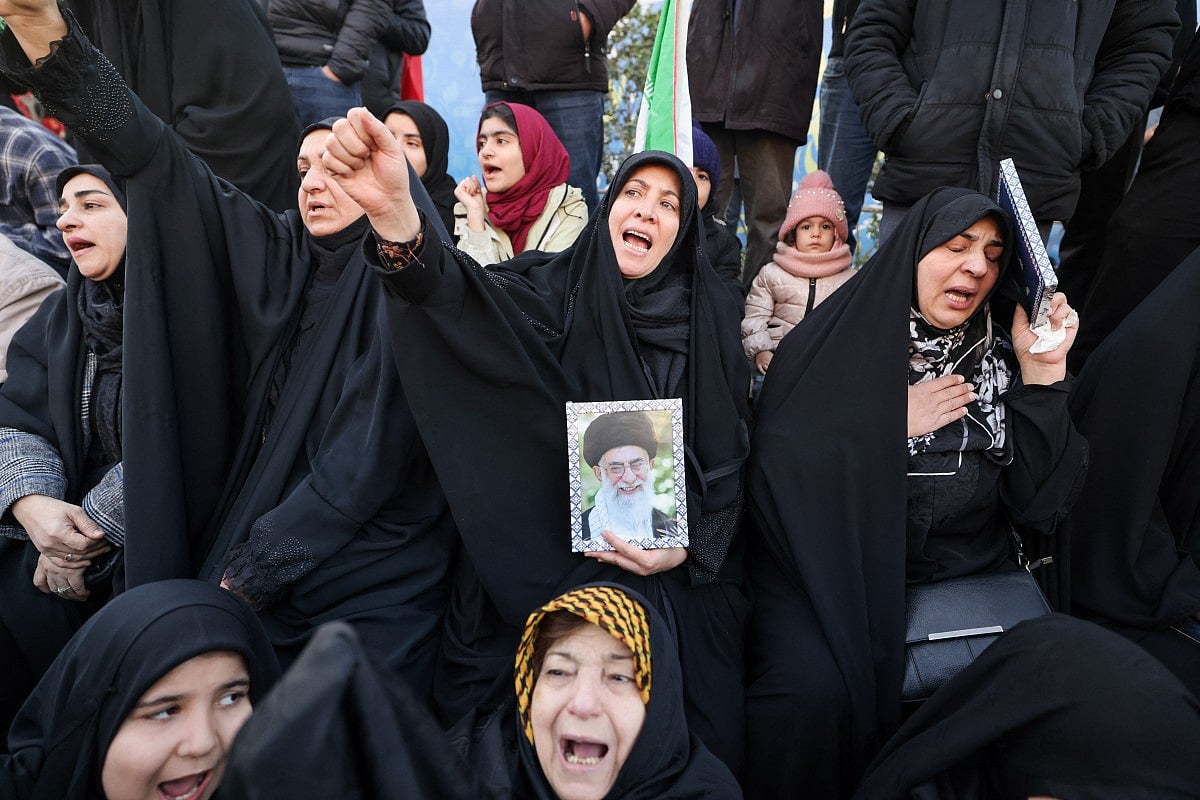
Conversely, for the loyalist factions, Khamenei's death was met with fervent demonstrations of grief and solidarity. Large crowds gathered in public squares and mosques across the country, a visible display of support for the regime that Israel and the US administration have openly vowed to topple. This stark division within Iranian society adds another layer of complexity to the already volatile situation, suggesting that any transition of power will be met with significant internal challenges and potential unrest.
To delve deeper into the complex domestic reactions within Iran, read Khamenei's Death: Iranians Grapple with Joy, Disbelief, and Escalating Conflict.
Escalation Beyond Borders: The Regional Fallout of Post-Khamenei Tensions
The immediate consequence of Khamenei's death has been a dramatic and terrifying escalation of hostilities across the Middle East. Tehran swiftly declared 40 days of national mourning and vowed "this great crime will never go unanswered," transforming words into action with alarming speed. In response to the US and Israeli assault, Iran launched retaliatory attacks against Israeli and US military bases in several countries.
The regional reverberations have been devastating. Israeli strikes have targeted various locations within Iran, including a tragic incident near Minab where state media reported over 150 girls killed at an elementary school. In parallel, Iranian retaliation saw blasts reported across the region, from Doha to the beaches of Dubai, claiming the lives of three US soldiers, at least nine people in Israel, and dozens of other casualties. This rapid-fire exchange of blows indicates that the conflict, barely a day old, has already metastasized into a wider regional war with unpredictable consequences.
The current situation is not merely a cycle of retaliation; it represents a dangerous new phase in the long-standing shadow war between Iran, Israel, and the United States. Without Khamenei's experienced hand, however repressive, the parameters of engagement may shift dramatically, potentially leading to miscalculations or bolder moves from all sides. The inherent danger lies in the lack of clear lines and the potential for any incident to trigger a full-blown military confrontation that could destabilize the entire global energy market and ignite a humanitarian crisis of immense proportions.
For more detailed analysis on the military responses and their implications, see Khameneis's Assassination: Iran's Retaliation and the Widening Regional Conflict.
The Succession Conundrum: Navigating Iran's Future Leadership
With Khamenei gone, the critical question of succession looms large, becoming a central driver of post Khamenei tensions. Iran's constitution stipulates that upon the Supreme Leader's death, the Assembly of Experts, a body of 88 religious scholars, is responsible for selecting his successor. However, the process is rarely straightforward, heavily influenced by behind-the-scenes maneuvering by powerful factions within the military, political establishment, and clerical hierarchy.
One name quickly emerged as a strong candidate: Ali Larijani. A former commander of the Islamic Revolutionary Guard Corps (IRGC) and a trusted insider, Larijani brings a unique blend of military background and political experience, having served as Speaker of Parliament and head of the Supreme National Security Council. His candidacy suggests a potential effort to maintain a semblance of continuity and stability, leaning on someone with deep ties to the security apparatus and a history of navigating complex political landscapes. However, any successor will face immense challenges:
- Internal Dissent: Balancing the demands of an emboldened opposition with the loyalty of hardline factions.
- Economic Woes: Addressing crippling sanctions and widespread poverty that fueled much of the anti-regime sentiment.
- Regional Conflict: Navigating a direct and open military confrontation with Israel and the US, a scenario Khamenei largely avoided.
- Legitimacy: Establishing authority and legitimacy in the eyes of a deeply fractured populace and a skeptical international community.
The role of the IRGC, a powerful military and economic force, will be paramount in this transition. Their allegiance and influence could either stabilize the new leadership or become a source of internal power struggles, further exacerbating the existing tensions.
Navigating the New Middle East: Implications and Outlook
The landscape of the Middle East has fundamentally shifted. The demise of Ayatollah Ali Khamenei has not only altered Iran's trajectory but has also introduced profound geopolitical uncertainties that demand careful observation. The immediate future is characterized by heightened post Khamenei tensions, making predictions difficult, but several key areas warrant attention:
- Regional De-escalation vs. Escalation: The initial wave of retaliatory strikes suggests a path towards further escalation. However, international diplomatic efforts, perhaps spearheaded by non-aligned nations or regional powers, could seek to establish back-channels to prevent a full-scale war. The balance between demonstrating strength and avoiding self-destruction will be critical for all parties involved.
- Global Energy Markets: The Strait of Hormuz, a vital chokepoint for global oil supplies, is central to Iran's strategic leverage. Any disruption there could send oil prices skyrocketing, impacting economies worldwide. Investors and policymakers should watch for any threats to shipping lanes.
- Cyber Warfare: Beyond conventional military strikes, the conflict is likely to manifest significantly in the cyber realm. Critical infrastructure in both Iran and its adversaries could become targets, leading to widespread disruption.
- Refugee Flows: A widening conflict could trigger significant humanitarian crises, leading to increased refugee movements that would further strain resources in neighboring countries and Europe.
Practical Considerations for Observers: Keep a close eye on official statements from Tehran regarding its new leadership and its stance on regional policy. Monitor the rhetoric from Washington, Tel Aviv, and key Gulf capitals for signs of either de-escalation or further intent to engage. The actions of proxy groups aligned with Iran will also be crucial indicators of Tehran's strategic direction under its new leadership. The stability of global markets, particularly energy and gold, will provide a real-time barometer of the perceived risk.
The unexpected death of Ayatollah Ali Khamenei marks a profound turning point for Iran and the Middle East. While his long reign was defined by internal repression and regional confrontation, his sudden absence has plunged the region into an even more dangerous and unpredictable phase. The intricate dance of succession, the immediate and ongoing military confrontations, and the deeply divided sentiments within Iran itself all contribute to a volatile mix of post Khamenei tensions. As the world watches with bated breath, the coming weeks and months will undoubtedly shape the future of a crucial region for decades to come.